Design systems that absorb whatever comes next.
Two design systems, for Semrush and BambooHR, built to carry a rebrand, a replatform and AI-assisted page building — without starting over each time.
- Clients
- Semrush · BambooHR
- My role
- Head of Design
- Scope
- Audits, Design Systems, Rebrands
- Tools
- Claude, Figma, Storybook, Sanity
- Timeline
- 2025-2026
The challenge
Component sprawl, brand assets scattered across files, and rebrands landing mid-flight — so every change meant another one-off build.
The mandate
One foundation that keeps the brand constant while the presentation flexes across products, campaigns and platforms.
The outcome
Living systems — tokens, composable components, and Figma that mirrors code — ready for a rebrand, a new CMS and AI-assisted page assembly.
01
Context
Semrush and BambooHR came to us at a similar moment: a new brand on the way, a growing product and marketing surface, and a design system that couldn’t keep up. Every variation meant a new build, and every update leaned on developers.
In both cases the answer wasn’t a new set of screens. It was a foundation that could take the rebrand — and whatever came after it — without starting over.
02
The approach
The same model sits under both systems. The brand and design principles stay constant at the base; the visual presentation adapts above it — so teams get consistency and flexibility at once.
Starter kit
- Atomic structure
- Foundational styles
- Design principles
- Brand
System*
- Atoms
- Molecules
- Organisms
- Screens
user
*Components in Figma mirror the coded components in Storybook.
- 01Primitive
blue-600 · space-4 · font-size-24Foundations: the raw palette, type scale and spacing. - 02Semantic
color.action.primaryAliases that say how a primitive is used, independent of any one component. - 03Component
button.primary.backgroundTokens tuned to a specific component’s attributes. - 04Product & theme
mode: Product X · RebrandModes and overrides let each product, campaign or brand flex without forking the system.
03
Semrush: design system, rebrand and replatform
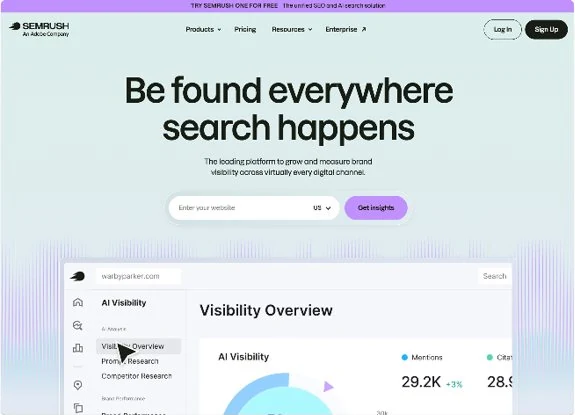
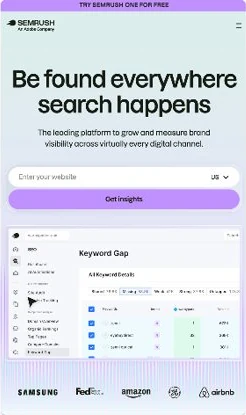
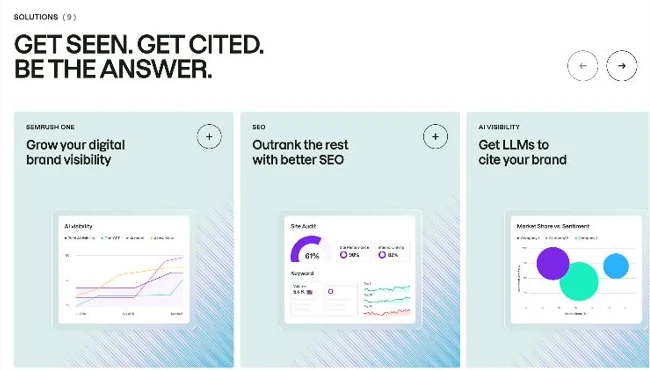
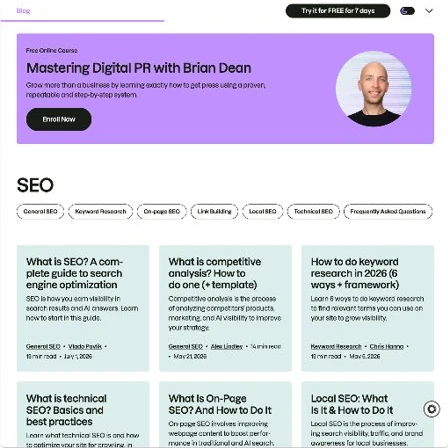
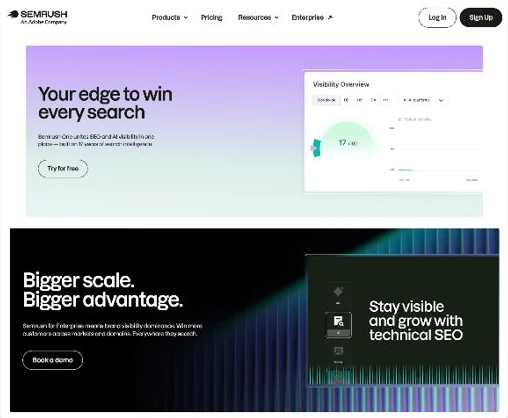
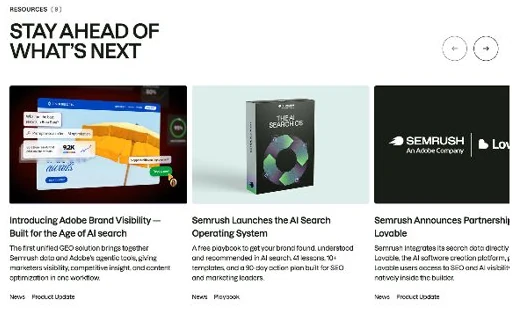
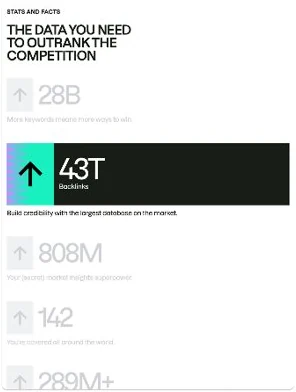
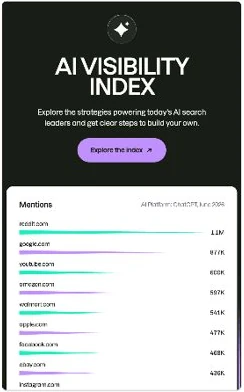
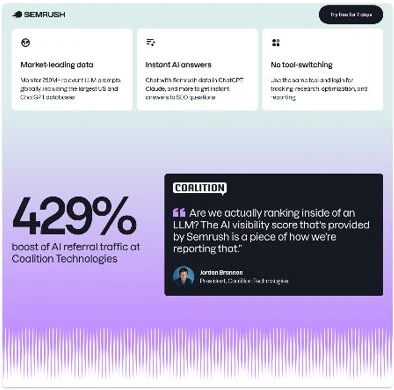
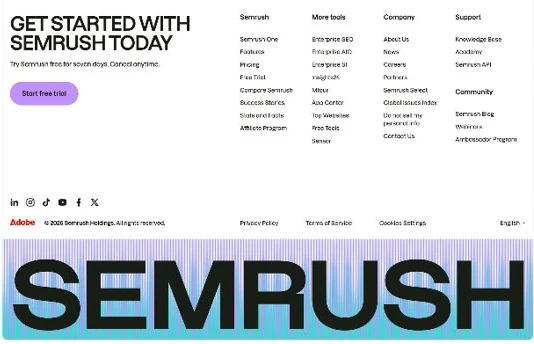
Three workstreams ran at once. Semrush’s in-house team was working with a branding agency on a complete rebrand while preparing to migrate to a new CMS, and we built the design system alongside both: taking the new identity as it evolved, translating it into tokens and components with Semrush’s designers and developers, and shaping every component around what the new CMS needed. The system became the place where the brand and the platform met, so neither had to wait for the other.
Audit
Every pattern on the existing site inventoried and mapped, so the system was built on evidence.
Rebrand
The agency’s new identity, turned into tokens, type and colour that reach every template.
Replatform
Responsive, boolean-driven components built for the new CMS, so content teams can build pages fast.
04
BambooHR: built for scale, rebrand and AI
On BambooHR’s old CMS, even small edits needed a developer. Then everything arrived at once: 95+ components heading toward 150+, a forced move to Sanity, 3,000 pages to cut to 2,000, a rebrand with no system to carry it, and a goal to build pages with AI. The real problem was structure, not tooling.
Phase 1 · The foundation: what exists, and who can change it
Token architecture
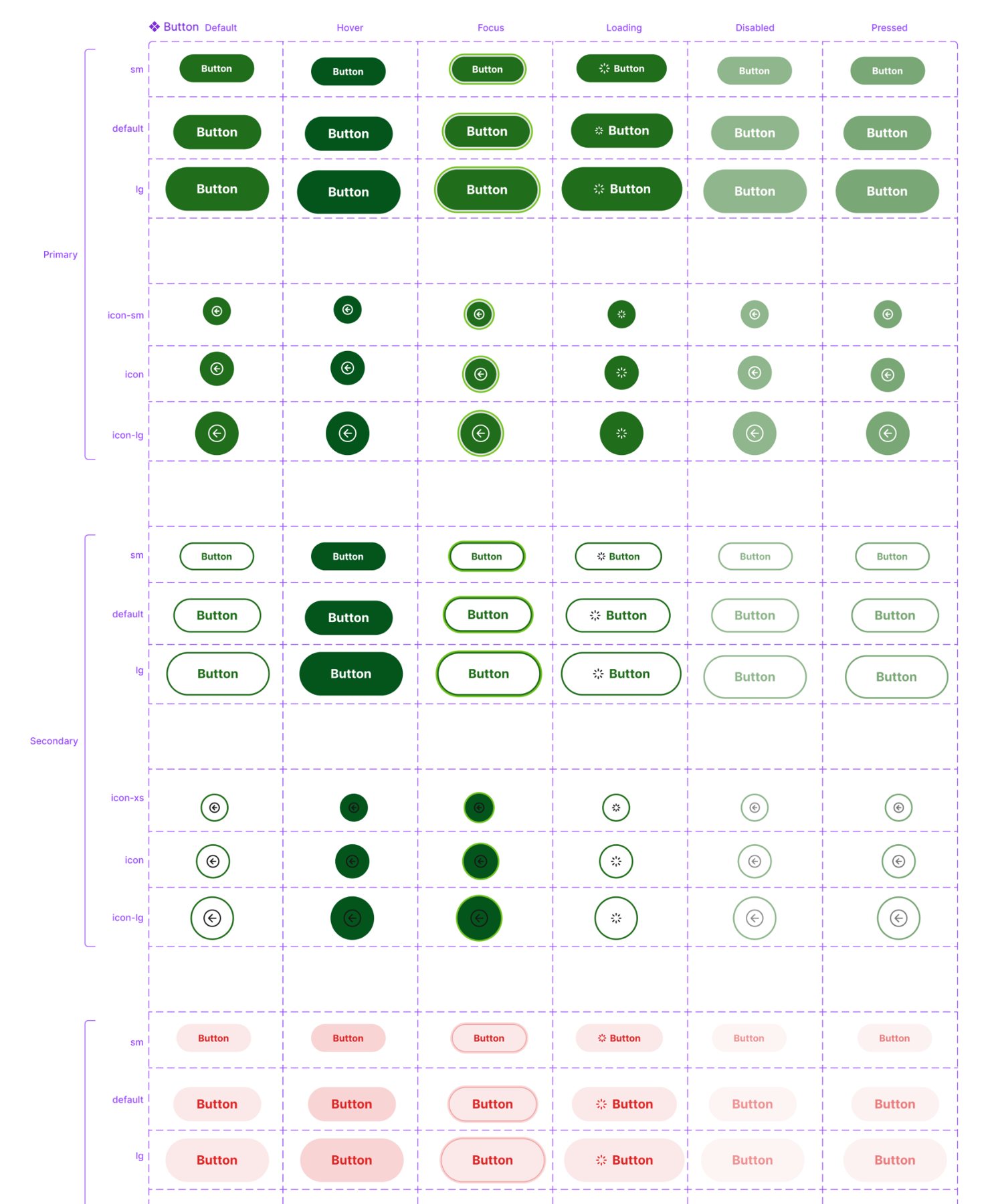
Brand primitives feed semantic tokens, which feed component tokens.
Rebrand as a theme
The new brand maps onto the existing tokens, so the site follows without a rebuild.
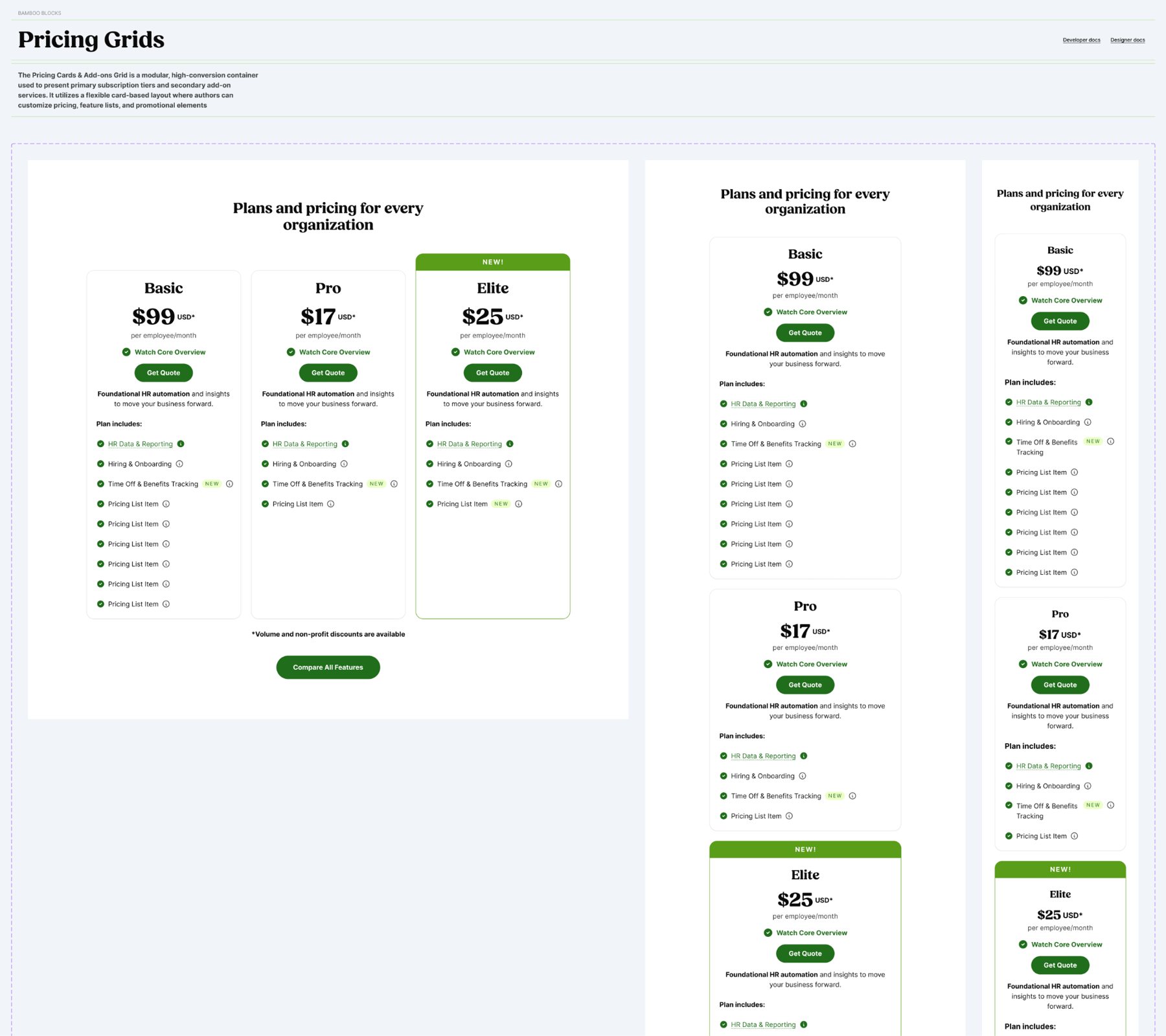
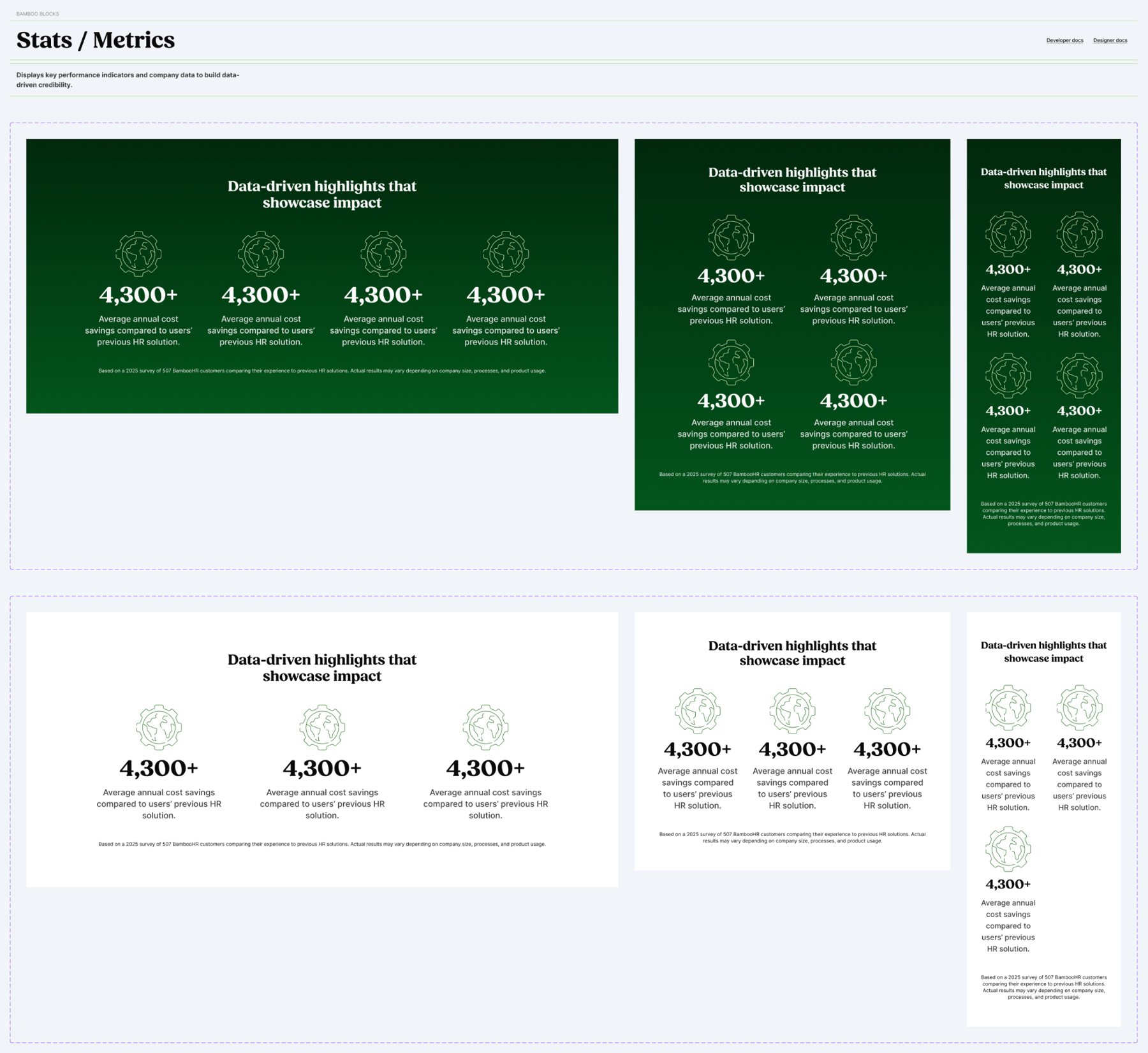
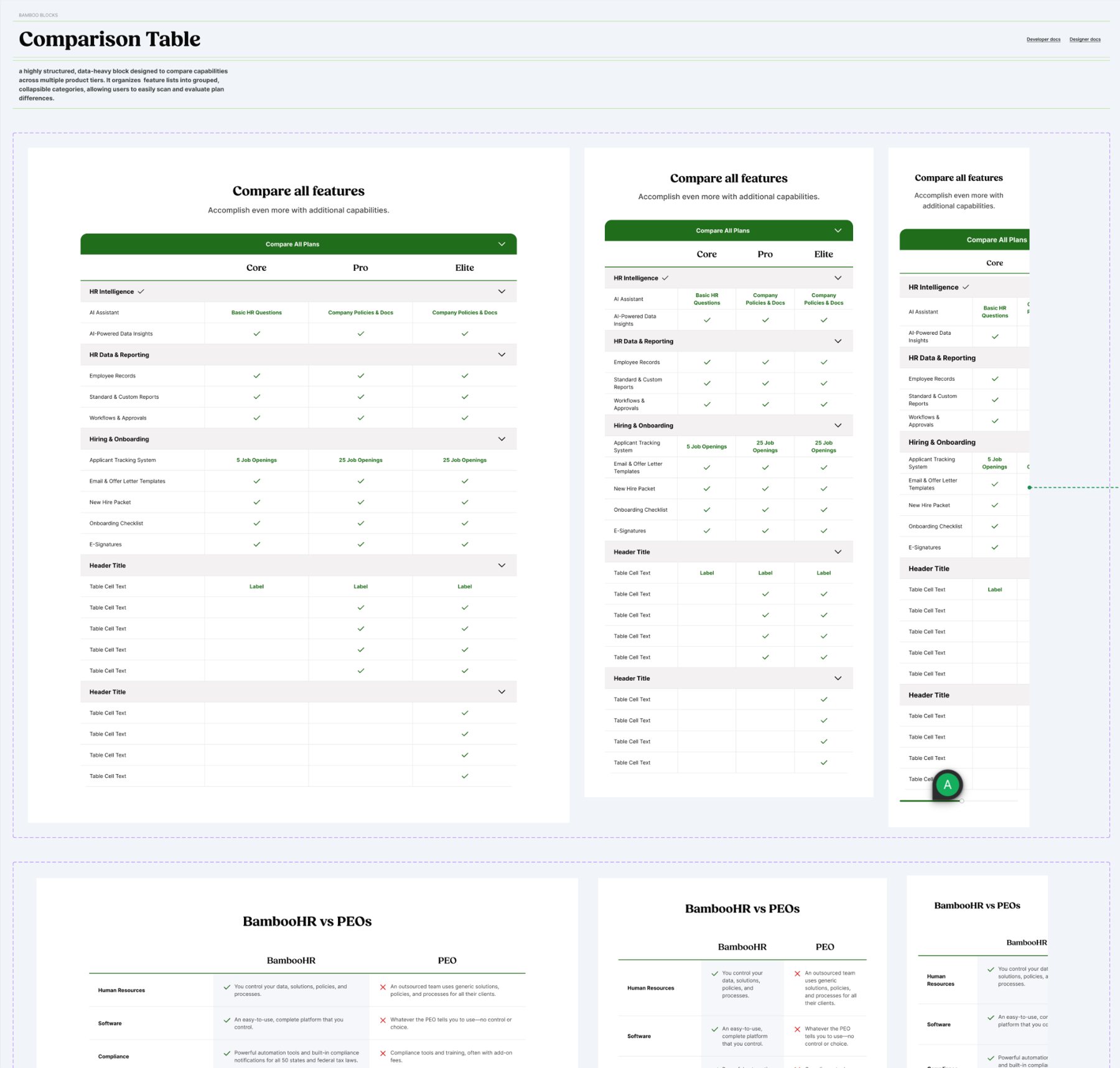
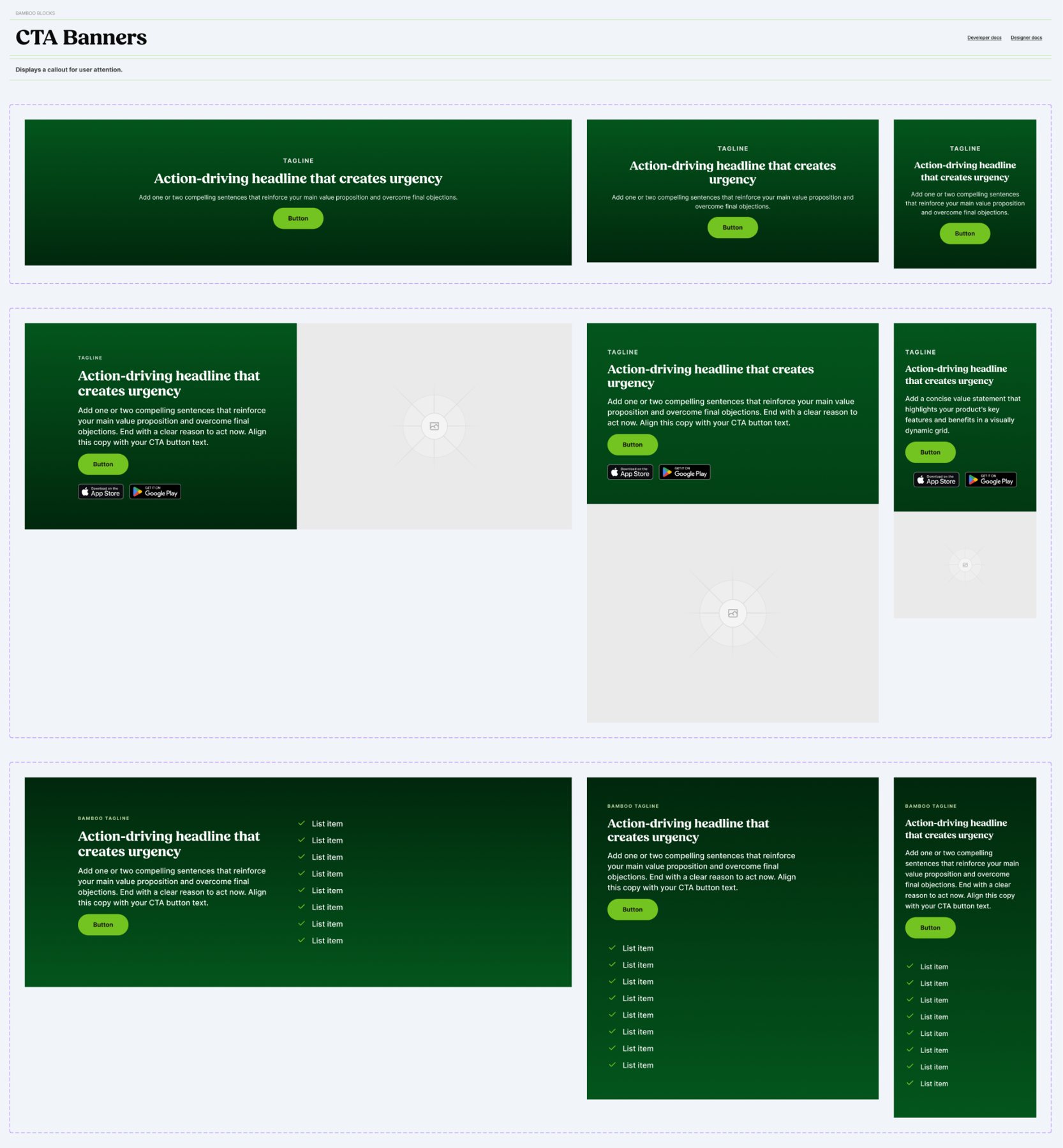
Composable library
An audited, consolidated set of atomic components combined into blocks.
Governance in Sanity
Role-based and section-level editing permissions.
Phase 2 · In progress
Teaching AI how to use the system
Through Figma’s MCP server, an AI agent can see which components exist, but not which to choose, where they may sit or what their copy must do. So it fills the gap confidently: lookalike components, variants editors can’t change, spacing that matches no token.
The answer is a Component Reference Document (CRD) for each of about 80 components and blocks, kept in the code repository and reviewed like code. The CRD was created by Cassie Groos at Unily for their Resin design system; I adapted it for BambooHR by retrofitting it to an existing library, and by making each CRD the shared source for Figma, Sanity and code.
docs/crd/button.md
- ## When to use — and when not to
- ## Where it can sit — atom or block, parents, children
- ## Copy rules — purpose, length, tone
- ## Accessibility — headings, alt text, contrast
- ## Mapping — Figma · Sanity · React
- ## Rejected patterns — and why
One file per component
Agents load only what they need.
Usage rules stay out of tokens
So the rebrand stays a token swap.
Generate, then validate
Claude drafts from Figma; BambooHR’s designer confirms.
Maintenance from day one
“CRD updated” is part of done.
05
The team
Design and engineering worked from the same source: components in Figma mirror the coded components in Storybook. I started with senior leadership at Semrush and BambooHR, setting how we’d work and introducing my team to their design and dev teams. From there, Alex, our senior manager, led design with Vanessa, our senior designer. The team met twice a week and reported to me weekly until both projects were complete.
- Design systemsAlex Iannantuono, Vanessa Miura
- Brand & visual designAlex Iannantuono, Vanessa Miura
- Front-end engineeringAlan Lyes, Jean Oliveira, Pipo Bizelli, Gary Hetherington
06
Outcomes
A rebrand, not a reskin
Semrush’s new identity reached every component and template through the system. Marketing requests now go from idea to live on the page in hours or a day, down from days to weeks.
From 95+ one-offs to a composable library
BambooHR’s components now nest and theme instead of multiplying.
Ready for AI
Phase 1 made the system machine-readable; Phase 2’s CRDs add the usage rules, so AI-built pages map back to parts editors can change. Phase 2 is in progress, and results aren’t in yet.
07
Reflection
AI didn’t make the design system less important. It made it the stable core that everything generated depends on. Pages and copy can be fluid, even disposable, as long as they come from something fixed. Agents can handle the vigilance of keeping Figma, Sanity, code and the CRDs in agreement. People still set the standards and answer for what ships.